
Is Lymph Tonic worth it?
Worth a look (4.5/10). Several of the ingredients in Lymph Tonic, diosmin, hesperidin, horse chestnut (aescin), nattokinase and bromelain, do have real published research for circulation, chronic venous insufficiency or post-surgical swelling. But Lymph Tonic is marketed specifically as a fix for lymphedema, a distinct and often serious medical condition usually managed with compression therapy, manual lymphatic drainage and, in some cases, surgery; direct clinical trials of a supplement like this one for diagnosed lymphedema are scarce. The sales page leans on a first-person story involving a fabricated-sounding corporate lawsuit, an unnamed 'Dr. Brenner,' and a secret Aboriginal remedy, none of which can be verified, and it never states a single milligram amount for any of its 12 ingredients despite explicitly claiming to avoid hidden doses. This is not medical advice and nothing here should be read as a claim that any product treats or cures lymphedema.
What we liked
- 60-day money-back guarantee, with returns accepted even on empty bottles
- Several named ingredients (diosmin, hesperidin, horse chestnut, nattokinase, bromelain) do have real published research for circulation-related conditions
- Potency standardizations given for several ingredients (65% AKBA, 20% aescin, activity units for enzymes), more detail than a bare ingredient list
- Liquid dropper format may suit people who have trouble swallowing capsules
- Free shipping on the 3- and 6-bottle bundles
What we didn't
- No milligram dose disclosed for any of the 12 ingredients
- Markets directly against a diagnosed medical condition (lymphedema) with unverifiable success statistics
- Founder story includes an unverifiable, dramatized corporate lawsuit and boycott
- Uses fear-based hypothetical scenarios (hospitalization, marriage strain, wheelchair use) to pressure a purchase
- $49-$79 a month depending on bundle, with claims to 'no proprietary blends' that the label itself does not support
What is Lymph Tonic?
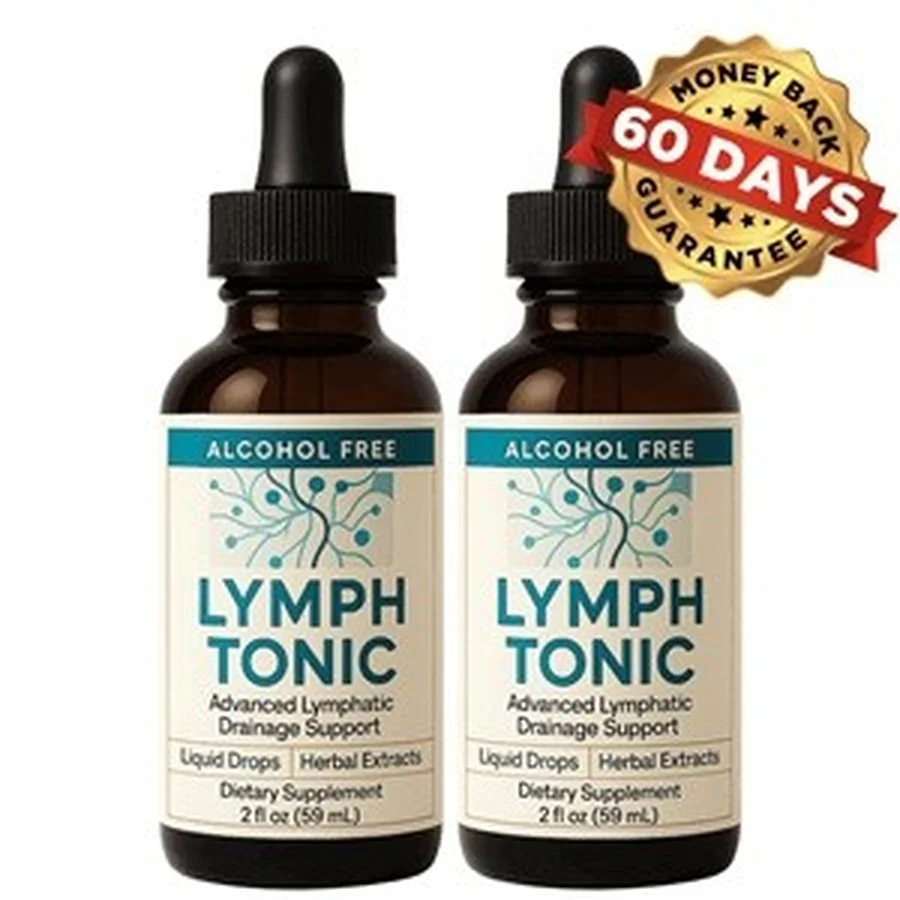
Lymph Tonic is a liquid herbal supplement sold in 2 fl oz (59 mL) dropper bottles, alcohol-free, with a standard dose of two droppers once daily (one bottle lasts 30 days at that dose; the page also describes doubling or tripling the dose for 'enhanced' or 'accelerated' protocols, which uses a bottle in 15 or 10 days instead). It lists 12 ingredients across four claimed 'pathways': anti-inflammatories (boswellia, baicalein, quercetin phytosome), vessel-repair compounds (hesperidin, diosmin, horse chestnut/aescin), enzymes said to break down blockages (nattokinase, bromelain, ginger), and absorption boosters (piperine, phosphatidylcholine, vitamin E).
The sales page is structured as a long first-person story: a woman named 'Jennifer' develops severe leg swelling (framed as lymphedema), is introduced to an Australian doctor referred to only as 'Dr. Brenner' who has supposedly studied an Aboriginal remedy for 23 years, turns his formula into Lymph Tonic, and then faces a legal threat from an unnamed '$340 million' compression garment company demanding she shut down and pay '$2.3 million in damages.' None of these specific people, credentials, studies or legal events can be verified from the page itself, and the lawsuit story in particular reads as a common but unverifiable advertorial device used to build urgency and credibility.
The page repeatedly targets 'lymphedema' by name, a recognized medical condition involving lymphatic system dysfunction that is typically managed by physicians with compression garments, manual lymphatic drainage therapy and sometimes surgery. It states specific claimed outcomes (a 94% success rate, 4-6 inch circumference reduction, 15-40 pounds of fluid drained) that we could not verify against any independent source.
Format: Alcohol-free liquid herbal drops, 2 fl oz (59 mL) bottle, standard dose 2 droppers once daily (30 servings per bottle). Sold by: Lymph Tonic (sold through ClickBank).
What is on the Lymph Tonic label?
Each row compares what the label or sales page states with what published research used. When an amount is missing, there is nothing to compare, and we say so.
The sales page names all 12 ingredients and gives potency standardizations for a few (65% AKBA boswellia, 20% aescin horse chestnut, 2,000 FU nattokinase, 2,400 GDU bromelain, 20% gingerols ginger), which is more detail than many ClickBank labels provide. But it states no milligram amount for any ingredient per serving, so despite the marketing claim of having 'no proprietary blends hiding weak doses,' there is no actual way to verify any dose against the research the page cites.
Do the Lymph Tonic claims hold up?
"94% success rate. 4-6 inch circumference reduction. 15-40 pounds of fluid DRAINED."
These specific outcome statistics appear nowhere except the sales page itself, with no study, sample size or methodology cited. We could not verify them against any independent source.
A '$340 million' compression garment company sent legal threats demanding the seller pay '$2.3 million in damages' and shut down
This entire legal-battle narrative, including a viral customer boycott, cannot be verified. No company is named, no lawsuit filing is referenced, and the story follows a common advertorial template (an underdog fighting a faceless corporation) used across many similar sales pages.
"One study found that people with untreated lymphedema have a 71% chance of complete disability within 10 years"
This is presented as an established statistic with no citation, journal or author given. Lymphedema can worsen without proper management, but this specific figure could not be traced to any source, and such precise disability statistics deserve real skepticism when used this way in a sales pitch.
"No fillers. No 'proprietary blends' hiding weak doses."
This is the opposite of what the label information on the page actually shows: none of the 12 ingredients have a stated milligram amount per serving, which is functionally the same transparency gap as an undisclosed proprietary blend, just without using that specific label term.
How much does Lymph Tonic really cost?
| Option | Total | Per month | Shipping |
|---|---|---|---|
| 2-month supply (2 bottles) | $158 | $79 | Shipping fee applies (amount not shown on the page we reached) |
| 3-month supply (3 bottles) | $207 | $69 | Free shipping |
| 6-month supply (6 bottles) | $294 | $49 | Free shipping |
Based on the order pages reached through our ClickBank link, a 2-bottle (2-month) supply is $158, a 3-bottle (3-month) supply is $207 ($69 a bottle), and a 6-bottle (6-month) supply is $294 ($49 a bottle). The sales page states the same $49-per-bottle figure for the 6-month tier directly in its text.
The 3- and 6-bottle bundles include two bonus digital guides (a 'Rapid Drainage Protocol' and an 'Inflammation Elimination Blueprint'), valued on the page at $178 combined, a standard bonus-stacking tactic.
The page claims a 'locked-in' price for life on reorders and warns that leaving without buying raises the price to $129 a bottle on return. Both of these are common scarcity and anchoring tactics and are not independently verifiable.
The sales page markets the 3- and 6-bottle bundles with free shipping. Exact shipping cost for the 2-bottle option was not shown in the page text we could access; it is not a headline free-shipping tier like the larger bundles.
Can you get a refund on Lymph Tonic?
60-day window. The sales page states a 60-day money-back guarantee: return the bottles, even if empty, within 60 days for a full refund. It also advertises a separate 'price lock' promise for future reorders, which is a pricing perk, not part of the refund itself. The order is processed by ClickBank.
Step by step: find the ClickBank receipt email, look up the order at clkbank.com and ask for a refund in writing. Our ClickBank refund guide covers returns, extra offers and auto-ship.
Which red flags did we find?
- Targets a diagnosed medical condition by nameThe page repeatedly promises to fix 'lymphedema,' a recognized medical condition normally managed by physicians with compression therapy and manual lymphatic drainage, using dramatic before/after outcome numbers with no clinical citation.
- Fabricated-sounding legal battleAn unnamed '$340 million' company, a '$2.3 million' damages demand and a viral customer boycott are described in detail but cannot be verified anywhere outside this sales page.
- No dose disclosed for any of the 12 ingredientsDespite explicitly claiming to avoid hidden doses, the page gives no milligram amount for any ingredient, only activity units for two of them.
- Unverifiable disability and success statisticsA '71% disability within 10 years' figure and a '94% success rate' are stated as fact with no source, sample size or citation.
- Aggressive urgency and fear tacticsThe page includes a lengthy hypothetical scenario describing a reader's future hospitalization, marriage strain and wheelchair use if they do not buy today, a fear-based sales technique rather than balanced health information.
Who should buy Lymph Tonic, and who should skip it?
It may suit you if
- You have mild fluid retention or circulatory discomfort, remain under a doctor's care for any diagnosed condition, and want to try a supplement containing some individually studied circulatory ingredients alongside your regular treatment.
- You are comfortable with the 60-day refund window as your main protection, since the ingredient doses and the founder story cannot be independently verified.
Skip it if
- You have doctor-diagnosed lymphedema and are looking for a way to reduce or replace compression therapy or manual lymphatic drainage. Those remain the standard, medically supported treatments; this supplement is not a substitute.
- You want to know the actual dose of each of the 12 ingredients you are taking. None are disclosed in milligrams on the sales page.
- You take blood thinners or have a bleeding disorder. Nattokinase and bromelain can both affect clotting, and the combination should be discussed with a doctor before use.
How we assessed this
We did not buy or use Lymph Tonic. This review audits the offer as it appeared on September 28, 2026. We read:
- The Lymph Tonic text sales page (trylymphtonic.com/tsl/) reached through our ClickBank link
- The three ClickBank order pages for the 2-, 3- and 6-bottle bundles, including their USD pricing shown with a US-based request
- The product bottle image and stated serving size/dosing instructions
- The full ingredient list and the standardizations given for boswellia, horse chestnut, nattokinase and bromelain
- PubMed search results confirming diosmin/hesperidin and horse chestnut/aescin are studied for chronic venous insufficiency, and that direct randomized trials of dietary supplements specifically for diagnosed lymphedema are scarce
Sources
- PubMed search: diosmin and hesperidin for chronic venous insufficiency
- PubMed search: horse chestnut (aescin) for chronic venous insufficiency
- PubMed search: dietary supplement treatment for lymphedema, randomized trials
- ClickBank customer support (orders and refunds)
Scores: evidence 2, price 6, refund 7.5, transparency 2.5. How we score.
Lymph Tonic FAQ
Is Lymph Tonic legit or a scam?
It is a real, purchasable product sold through ClickBank with a working 60-day refund, so it is not a scam that takes your money for nothing. The concern is the marketing: it targets a specific diagnosed medical condition with unverifiable success statistics and a dramatized, unconfirmed legal-battle story, and it discloses no milligram dose for any of its 12 ingredients.
Can Lymph Tonic treat or cure lymphedema?
We cannot verify that claim, and it should not be read as one. Lymphedema is a recognized medical condition generally managed with compression therapy, manual lymphatic drainage and sometimes surgery, under a doctor's care. Nothing in this review should be taken as advice to replace that care with a supplement.
How much does Lymph Tonic cost?
Based on the order pages we reached, a 2-bottle supply is $158, a 3-bottle supply is $207 ($69 a bottle), and a 6-bottle supply is $294 ($49 a bottle), which the sales page also states directly.
How do I get a Lymph Tonic refund?
The sales page says to return the bottles, even if empty, within 60 days for a full refund. Your ClickBank receipt from clkbank.com is the fastest way to start that process.
What are the side effects of Lymph Tonic?
The page does not list a Supplement Facts panel or safety warnings that we could access, and no dose is given for any ingredient. Nattokinase and bromelain can affect blood clotting, so anyone on blood thinners or with a bleeding disorder should talk to a doctor before use.