Is ProMind Complex worth it?
Worth a look (4.6/10). ProMind Complex does something unusual for a ClickBank supplement: it publishes a complete Supplement Facts panel with an exact milligram or microgram figure for all eight ingredients, so there is no hidden proprietary-blend total to guess at. The problem shows up once you compare those numbers with the research the sales page leans on. Huperzine-A is listed at 10 mcg, roughly a tenth of the amounts used in cognitive studies; vinpocetine at 2 mg against trial doses of 10-40 mg; ginkgo biloba at 50 mg against a typical 120-240 mg; and bacopa monnieri at 120 mg against a commonly studied 300 mg. St. John's Wort, the largest ingredient on the label at 250 mg, is a well-studied herb for mood, not memory, and the label carries its own photosensitivity and drug-interaction warnings. The entire pitch is delivered by "Carl Henderson," described as a psychology professor of three decades' experience, a persona we could not verify against any published research, university listing or press record. A real, published label and a genuine 60-day refund are the honest parts of this offer; the doses behind the pitch are not.
What we liked
- Full Supplement Facts label published with an exact amount for every one of the eight ingredients
- No hidden proprietary blend; every ingredient is a real, identifiable substance
- Genuine 60-day refund window confirmed on a dedicated policy page, explicitly covering empty bottles
- One-time purchase pricing with no forced subscription on any of the three packages
- Free US shipping stated on all three package tiers
What we didn't
- Most of the named nootropics (huperzine-A, vinpocetine, ginkgo, bacopa, N-acetyl L-carnitine) are dosed at a fraction of their studied amounts
- St. John's Wort, the largest ingredient by weight, is a mood herb with real drug-interaction warnings, not a memory-specific ingredient
- The narrator's professorship and research history could not be independently verified
- "Phosphatidylserine 4% Complex" wording leaves the true active dose ambiguous
- Refund requires mailing all bottles back at the buyer's own shipping cost
What is ProMind Complex?
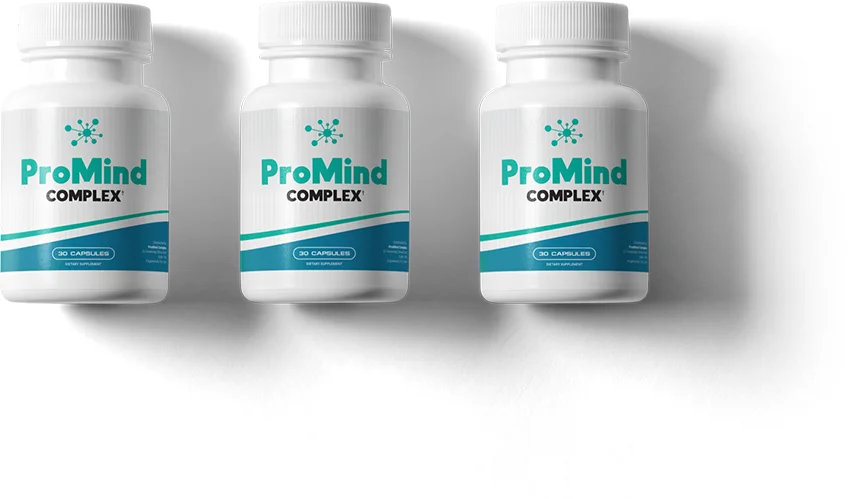
ProMind Complex is a capsule supplement sold as a memory and cognitive-support formula, marketed through a first-person narrative from "Carl Henderson," who introduces himself as a Professor of Psychology in Austin, Texas with three decades in memory research. The presentation opens with six general memory tips (hydration, sleep, avoiding toxins and so on) before pivoting to the supplement itself. A bottle holds 30 capsules, and the label's suggested use is 1 to 2 capsules daily with meals, which means a single bottle can run out in as little as 15 days if a buyer takes the higher end of that range rather than the 30 days assumed on the order page.
The Supplement Facts panel, published as an image on the site's references page rather than shown during the video pitch itself, lists: St. John's Wort (Flower) 250 mg, L-Glutamine 150 mg, Phosphatidylserine 4% Complex 125 mg, Bacopa Monnieri Extract (Leaf) 120 mg, Ginkgo Biloba (Leaf) 50 mg, N-Acetyl L-Carnitine Hydrochloride 50 mg, Vinpocetine (Seeds) 2 mg and Huperzine-A (Aerial Parts) 10 mcg, based on a one-capsule serving. Several of these are recognizable, legitimately researched nootropic ingredients, but at a fraction of the doses used in the trials that gave them their reputation: huperzine-A studies commonly use 50-200 mcg per dose rather than 10 mcg total, vinpocetine trials use 10-40 mg/day rather than 2 mg, and bacopa's most-cited human trials use around 300 mg/day of standardized extract, not 120 mg. The "Phosphatidylserine 4% Complex" wording is also ambiguous: it is unclear whether the full 125 mg is phosphatidylserine or whether 125 mg is the weight of a complex that is only 4% phosphatidylserine by content, which would put the active amount closer to 5 mg, well under the 100-300 mg used in cognitive-decline research.
The product is sold through ClickBank, and the checkout runs through the "promindc" pay.clickbank.net subdomain, matching the vendor named in our affiliate link. The label states the product is distributed by "ProMind Complex" in Englewood, Colorado, with no named company officer or manufacturer beyond that. Refunds are processed through a separate address in Aurora, Colorado, a fulfillment center address we also found on an unrelated ClickBank topical, indicating a shared third-party warehouse rather than anything specific to this brand.
Format: Capsule supplement, 30 capsules per bottle, 1 to 2 capsules daily with meals. Sold by: ProMind Complex (sold through ClickBank).
What is on the ProMind Complex label?
Each row compares what the label or sales page states with what published research used. When an amount is missing, there is nothing to compare, and we say so.
ProMind Complex deserves credit for publishing a full label with an exact amount for every ingredient, but almost every named nootropic is dosed at a fraction of the amount used in its supporting research, and the largest ingredient by weight, St. John's Wort, is studied for mood rather than memory.
Do the ProMind Complex claims hold up?
For three decades I had the pleasure of working with some of the brightest minds who have studied the intricate processes of human memory
This credential comes from an unverified first-person narrator ("Carl Henderson") with no linked university profile, publication record or independent biography we could locate; we could not confirm the professorship or the research history.
A simple, yet powerful formula, consisting of amazing vitamins and plants, such as Huperzine A, Ginkgo biloba Leaf, Vincopetine, St. John's Wort, Bacopa monnieri and many others
All eight labeled ingredients are real, identifiable substances, but most are dosed well below the amounts used in the human studies commonly cited for their cognitive effects.
I initially wanted to set the value for a bottle at $99 a bottle... you can have it for yourself for only $69 a bottle
The $69 single-bottle price is the standard, permanently displayed tier on the order page for every visitor, not a limited discount tied to watching the presentation; the $99 figure functions as an anchor price rather than a price ever actually charged.
You'll be FULLY covered by my 60-day 100% money-back, empty-bottle guarantee
Confirmed on the site's own refund policy page: the 60-day window explicitly covers empty bottles, counted from the ship date. The same page requires mailing all bottles back at the buyer's own shipping cost.
How much does ProMind Complex really cost?
| Option | Total | Per month | Shipping |
|---|---|---|---|
| 1 bottle | $69 | $69 | Free within the United States; the page notes an extra fee for shipping outside the US without stating the amount |
| 3 bottles | $177 | $59 | Free within the United States; the page notes an extra fee for shipping outside the US without stating the amount |
| 6 bottles | $294 | $49 | Free within the United States; the page notes an extra fee for shipping outside the US without stating the amount |
A single bottle of ProMind Complex costs $69 and, at the label's maximum suggested dose of two capsules a day, lasts 15 days rather than the 30-day supply the order page assumes; at one capsule a day it lasts the full 30 days. The 3-bottle package costs $177 total ($59 per bottle) and the 6-bottle package costs $294 total ($49 per bottle), both marked with free US shipping.
Assuming the one-capsule-a-day serving the order page bases its day counts on, the effective monthly cost ranges from about $49 on the 6-bottle bundle to $69 on a single bottle, putting it in the middle of the price range for ClickBank cognitive supplements. Buyers who take two capsules a day, which the label explicitly allows, would pay roughly double that monthly cost.
There is no subscription option: all three packages are one-time purchases, and the page does not add a recurring charge unless the buyer separately opts into any pop-up offer encountered elsewhere in the checkout flow. The 60-day refund window applies to any of the three packages if the buyer returns every bottle received.
All three packages are marked "*Free Shipping" on the order page for US addresses. A footer note states that international shipping (outside the United States) carries an extra fee, with a link to a shipping policy page, but no dollar amount is shown on the sales page itself.
Can you get a refund on ProMind Complex?
60-day window. The dedicated refund policy page confirms a 60-day guarantee counted from the ship date, not the order date, and explicitly covers empty bottles. To get the refund you must mail every bottle from the order back to a return address in Aurora, Colorado at your own cost; the page states the company does not cover return shipping. Sending the package on day 59 still qualifies as long as it is postmarked within the window.
Step by step: find the ClickBank receipt email, look up the order at clkbank.com and ask for a refund in writing. Our ClickBank refund guide covers returns, extra offers and auto-ship.
Which red flags did we find?
- Unverifiable narrator credentialsThe entire pitch is delivered in the voice of "Carl Henderson," described as a psychology professor with 30 years of memory research, but no university affiliation, publication record or independent biography could be found to confirm this identity.
- Most named ingredients are dosed far below their research dosesHuperzine-A (10 mcg vs. 50-200 mcg studied), vinpocetine (2 mg vs. 10-40 mg), ginkgo biloba (50 mg vs. 120-240 mg) and bacopa monnieri (120 mg vs. 300 mg) are all a fraction of the amounts used in the studies behind their reputations.
- Largest ingredient is a mood herb, not a memory ingredientSt. John's Wort, at 250 mg the single largest ingredient by weight, is studied almost exclusively for depression and mood, not memory, and the label carries its own warnings about photosensitivity and drug interactions.
- Ambiguous phosphatidylserine labeling"Phosphatidylserine 4% Complex" does not clearly state whether 125 mg is pure phosphatidylserine or the weight of a larger complex that is only 4% phosphatidylserine, a wording choice that could make the true active amount far smaller than the number on the label suggests.
- Anchor-price discount framingThe pitch frames $69 as a limited discount off a $99 "true" price available only to viewers who "act today," but $69 is the standard price shown on the order page to every visitor, not a time-limited offer.
Who should buy ProMind Complex, and who should skip it?
It may suit you if
- Someone who wants a supplement with a complete, exact-amount label rather than a hidden proprietary blend
- Someone who has researched St. John's Wort for mood support and is comfortable with its photosensitivity and interaction warnings
- Someone who wants a straightforward one-time purchase with no forced subscription
Skip it if
- You are taking anticoagulants, MAO inhibitors, or other medications that interact with St. John's Wort
- You are looking for the memory-specific nootropics (huperzine-A, vinpocetine, ginkgo, bacopa) at the doses used in the studies that established their reputations
- You are relying on the narrator's professional credentials as a reason to trust the formula; they could not be independently verified
How we assessed this
We did not buy or use ProMind Complex. This review audits the offer as it appeared on September 28, 2026. We read:
- The full text-version sales page, including the narrator's story, the six memory tips and the pricing cards
- The site's references page, including its list of linked PubMed and NCBI sources and the published Supplement Facts label image
- The dedicated refund policy page in full, including the return address and ship-date-based 60-day window
- The order page's embedded pricing configuration (base64-encoded JSON) confirming the $69 / $177 / $294 package prices and day supplies
- The checkout link's ClickBank vendor subdomain ("promindc") matching our affiliate hoplink
Sources
- ProMind Complex sales page (text version)
- ProMind Complex references page and Supplement Facts label
- ProMind Complex refund policy
- PubMed: Huperzine A research (cognitive/Alzheimer's context)
- ClickBank order support
Scores: evidence 2.5, price 4.5, refund 7, transparency 4.5. How we score.
ProMind Complex FAQ
Is ProMind Complex legit?
It is sold through ClickBank and publishes a full ingredient label with exact amounts, which is more transparent than many competitors. However, most of its named nootropics are dosed well below the amounts used in the research behind them, and the presenter's professional credentials could not be independently verified.
How much does ProMind Complex cost?
A single bottle is $69, a 3-bottle package is $177 ($59 each), and a 6-bottle package is $294 ($49 each), all one-time purchases with free US shipping. International orders carry an unstated extra shipping fee.
What are the side effects of ProMind Complex?
The label warns that St. John's Wort may cause photosensitivity and skin irritation, and cautions against use by anyone on anticoagulants or MAO-inhibiting drugs, or anyone with a history of seizures, without medical advice. The product is made in a facility that also processes milk, soy, wheat, egg, peanuts, tree nuts, fish and shellfish, and it contains soy (lecithin).
How do you get a ProMind Complex refund?
Contact the support email within 60 days of the ship date (not the order date), fill in the return form included with the order, and mail all bottles from the order, including empty ones, to the return address in Aurora, Colorado at your own shipping cost.
Does ProMind Complex actually improve memory?
We audited the offer, not the product's real-world effect. Several of its ingredients have published cognitive research behind them, but the amounts on this label are generally well below the doses used in that research, so the label does not support the memory claims made in the sales pitch at face value.